
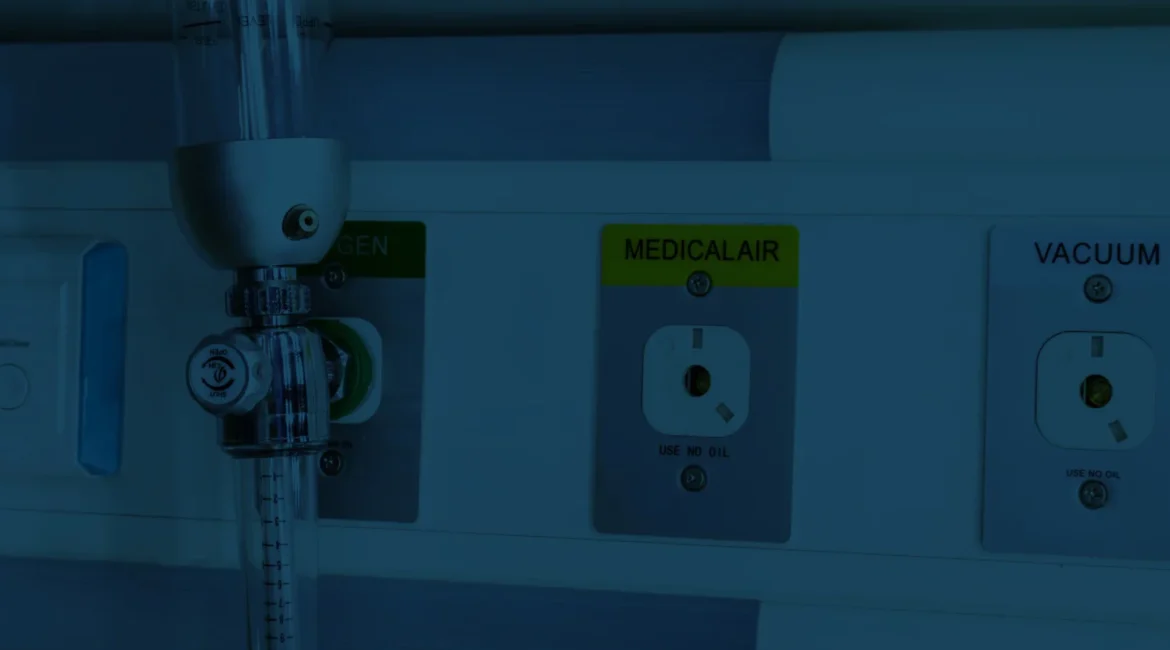
Behind every hospital, surgery center, and healthcare facility is a medical gas pipeline system. This system delivers the gases clinicians rely on every day. Several interconnected components work together to deliver medical gases safely, reliably, and efficiently throughout the facility.
Medical Gas Outlet Stations
Medical gas outlet stations give healthcare staff direct access to medical gases and vacuum services throughout the facility. You’ll find these outlets in patient rooms, operating rooms, emergency departments, and other care areas.
Each outlet connects the pipeline system to medical equipment and patient care devices. Gas-specific connections help prevent cross-connections and promote safe operation.
Zone Valve Boxes
Zone valve boxes play an essential role in system safety and maintenance. They allow facility personnel to isolate specific areas of the medical gas system without interrupting gas service to the rest of the facility.
During maintenance, renovations, or emergencies, staff can quickly shut off gas flow to a designated area while the remainder of the system stays operational.
Alarm Systems
Medical gas alarm systems continuously monitor system performance and alert staff when conditions move outside normal operating ranges.
These systems monitor source equipment, pipeline pressure, vacuum levels, and other critical operating conditions. Master alarms oversee the entire system, while area alarms monitor individual facility zones. Visual and audible alerts allow staff to respond quickly when issues occur.
Pressure Regulators and Control Equipment
Medical gases are often generated or stored at pressures much higher than healthcare providers need at the point of use.
Pressure regulators reduce the pressure and maintain the correct operating level throughout the system. Consistent pressure helps ensure reliable system performance and provides clinicians with the gas supply they need.
Source Equipment
Every medical gas pipeline system starts with reliable source equipment.
Depending on the application, source equipment may include medical air compressors, medical vacuum systems, manifolds, bulk gas systems, or other gas supply equipment. These systems generate, store, and distribute medical gases throughout the facility.
Pipeline Components and Fittings
The piping network forms the backbone of the medical gas pipeline system.
Medical gas pipelines, fittings, valves, connectors, and accessories transport gases from the source equipment to the point of use. Proper design, installation, and maintenance help ensure long-term reliability, safety, and regulatory compliance.
A Complete System Working Together
A reliable medical gas pipeline system depends on every component working together.
At GlobalVac & Air, we help healthcare facilities design, install, and support complete medical gas systems. From source equipment and pipeline components to monitoring solutions and ongoing support, our team delivers reliable, compliant solutions built for long-term performance.